Soil and Water Conservation
Soil erosion is a serious threat to agricultural production because of two reasons. Firstly, it takes a long period of time for anyone — even scientists — to recognize that the land is being degraded due to soil erosion. Secondly, the problem of soil erosion problem is usually addressed by looking at the consequences, rather investigating and treating the cause of problem. Two well-known examples are that low soil fertility and soil compaction due to soil erosion are treated with the application of inorganic fertilizer and tillage respectively, rather than attempting to control the process of soil erosion.
The quality of water affects the health of the community and also the crops. Fluoride, hardness, heavy metals, and various other pollutants in water have a potential to cause health hazards in people. It is believed that the Chronic Kidney Disease (CKDu) prevailing in the dryzone of Sri Lanka is induced by poor water quality. Saline water can cause soil salinity and leads to poor crop production.
Physical restoration of tanks reduces water loss and increase tank water availability. In the mean time proper water management mechanisms have to be developed to efficiently use the scares water resources in the dry zone landscape.
To conserve soil and water resources, the Kapiriggama cascade tank restoration project had the overall goal of achieving sustainable land and irrigation water management of agricultural systems to enhance the soil productivity of the catchment; and the following specific objectives:
- to minimize soil erosion and siltation of tanks
- to enhance soil moisture
- to enhance soil fertility
- to decrease soil and water pollution by minimizing the use of agrochemicals
- to increase the resilience of upland agricultural systems against drought
- to enhance efficiency in irrigation water management
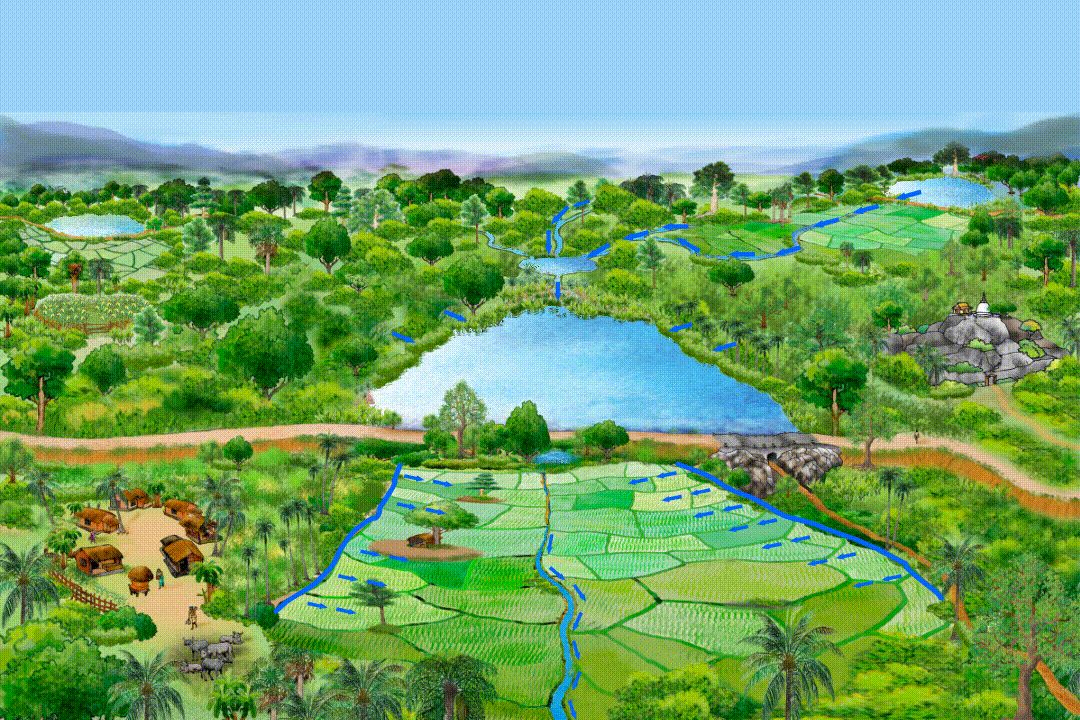
Water Flow in a Cascade
| Project activity | Achievements |
|---|---|
| Conduct soil quality assessment | Soil nutrient content, soil drainage class classification, and land ownership maps have been developed. Soil health cards have been produced for 140 paddy lands as demonstration of using the existing soil quality data for soil fertility management |
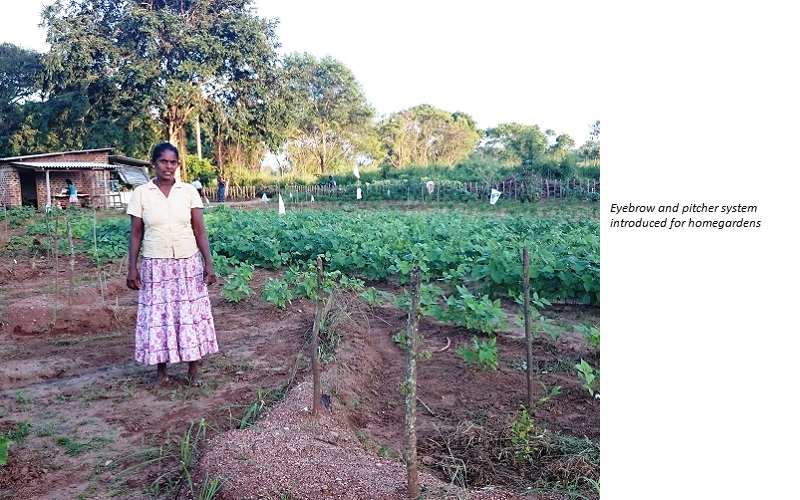
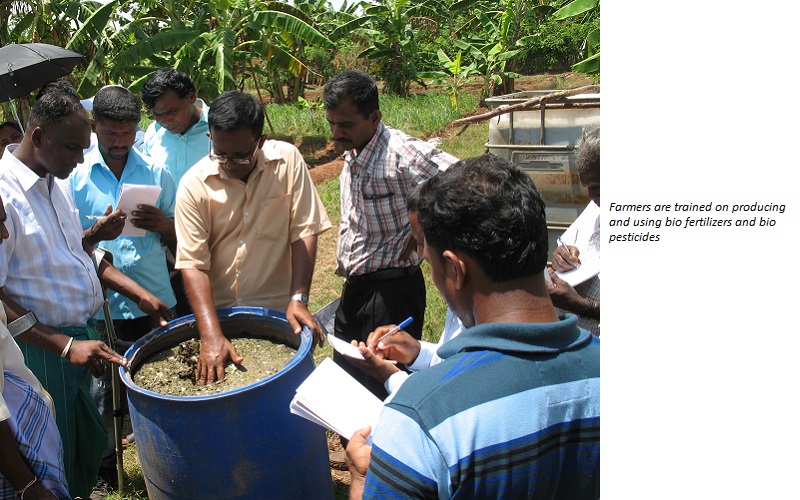
| Improved home gardens and sustainable agriculture | More than 250 farmers were trained on the preparation of organic fertilizers and bio-pesticides. Over 250 families benefitted |
| More than 20,000 meters of soil conservation bunds were established in the over 100 acres of farm lands, which are upstream of the tanks, to prevent soil erosion | Soil erosion reduced by 40% in these farmlands by establishing soil conservation bunds. Therefore, tank sedimentation risk reduced by 40% |
| Soil fertility enhancement and soil and water quality conservation | More than 250 farmers were trained on the preparation of organic fertilizers and bio-pesticides; and Improved home gardens and sustainable agriculture benefitting over 250 families 55 farmers have been trained to transfer the technology to other farmers in the area |
| Promote traditional rice varieties which are resistant to drought and salinity and develop market linkages to ensure sustainability | Reducing soil and water pollution as traditional rice farming does not use agrochemicals |
| 238 water sources from the project area tested to check the suitability of water for drinking | Test results showed that 64 sources were unsuitable for drinking and another 88 sources to have moderate quality. An attempt was made to reduce the health risk by educating the community on the test results and advising to refrain from consuming water from the unsuitable sources External linkages developed between the community/officials and other partners/stakeholders to engage in proving good quality drinking water to the community |
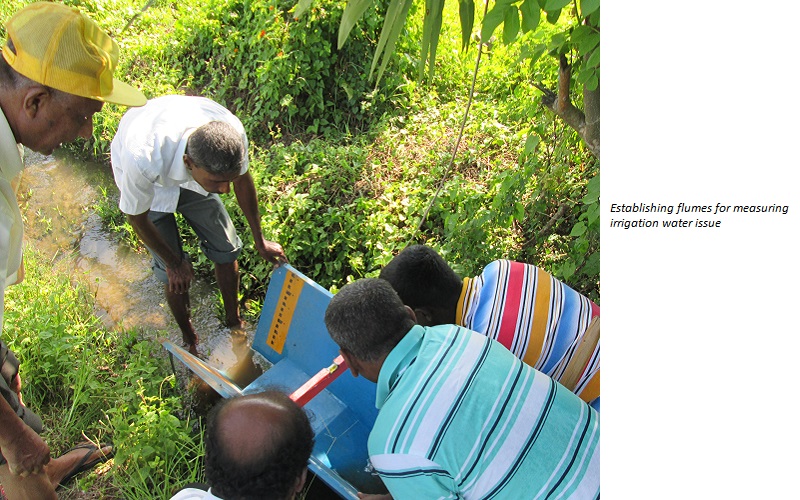
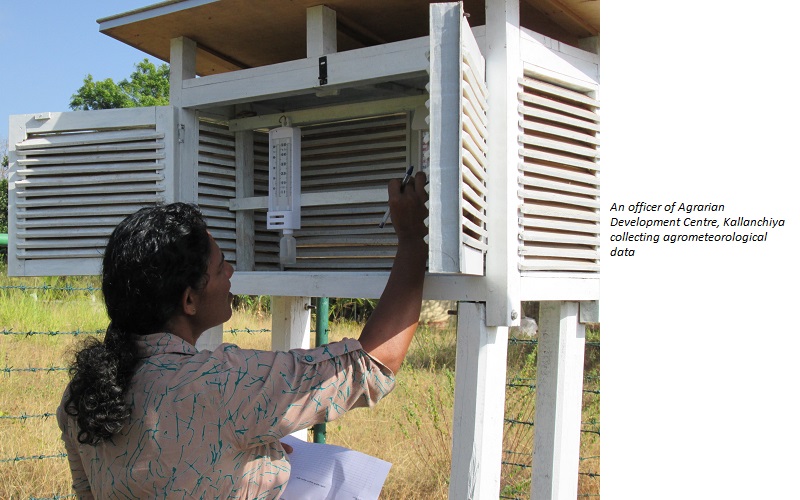
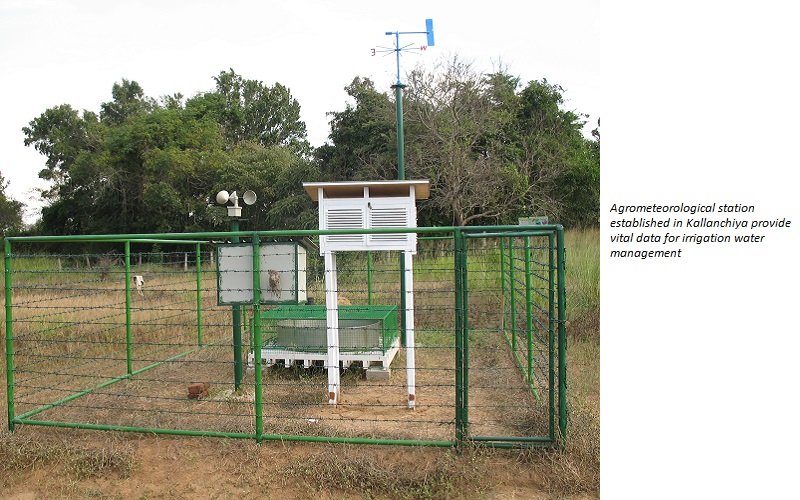
| Establish infrastructure required for irrigation water management Train farmers and officers in irrigation water management | An agro-meteorological station station was established in the Agrarian Service Center of DAD in Kallanchiya. 16 rain gauges, 23 depth gauges, and 15 flow measuring devices were established in the project area to collect data for irrigation water management. 195 farmers and 25 officers were trained in irrigation water management in small tank cascade systems |