Ecosystems Restoration
An ecosystem functions as a unit to provide a range of ecosystem services that are extremely beneficial to humans. (See overleaf for more detail.) A village tank cascade is a centuries-old ecosystem that has provided villagers living in its surrounds with a suite of life-sustaining ecosystem services for their daily needs — such as food, medicines and fuelwood; absorption of carbon, purification of water; control of erosion and stabilisation of stream banks.
A range of human induced activities — such as deforestation, overexploitation, pollution, and the spread of invasive alien species — has degraded the traditionally rich Kapiriggama village tank cascade ecosystem (see Brief #1). There was an urgent need, therefore, to rehabilitate these tanks and restore the cascade ecosystem to ensure that the historical benefits that the community enjoyed are provided again.
Function of Tree Belt as a Windbreak
The overall goal was to rehabilitate the irrigation system and restore the cascade ecosystem, with enhanced biodiversity, to provide adequate and good quality water for all needs of the community. Specific objectives were as follows:
i) to create awareness about the tank cascade ecosystem and its services; and
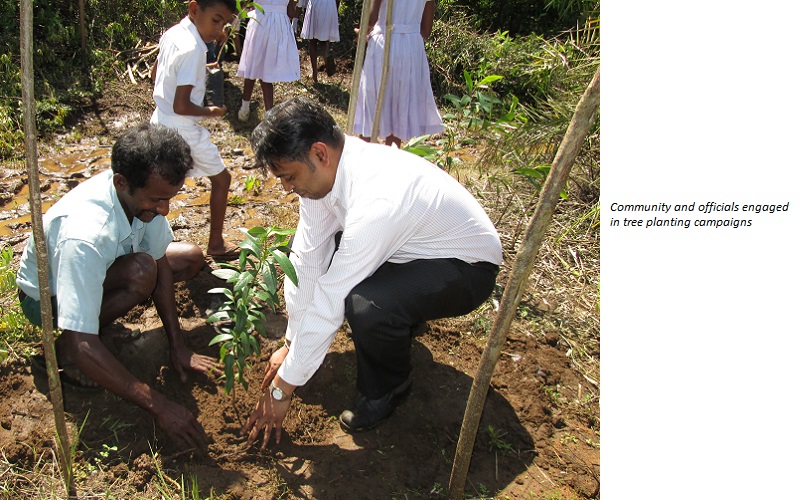
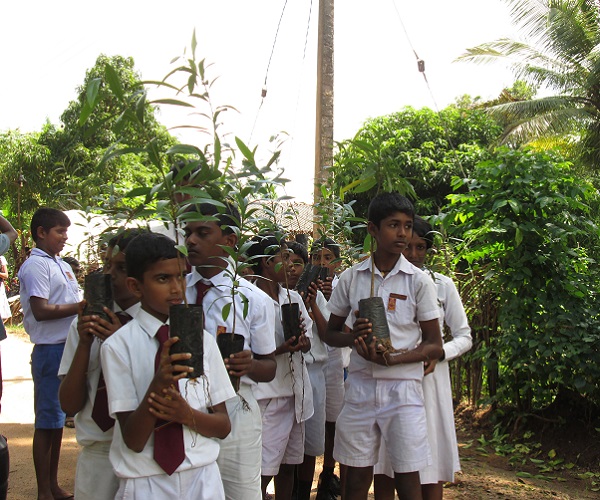
ii) to carry out ecosystem restoration with involvement from the community. To this end, elements of each tank (see Brief # 1) were evaluated and actions taken to rehabilitate and restore these elements.
Ecosystem restoration of tanks elements
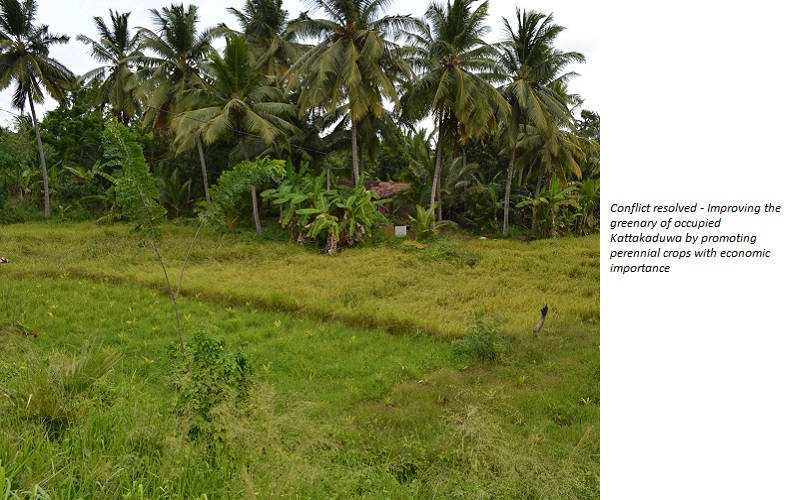
Kattakaduwa (interceptor):
The kattakaduwa area was demarcated in six tanks — facilitating restoration activities and also for the conservation, in future, of this element;
In 12 tanks — Puliyankulama, Maha Kadiyawa, Kuda Kadiyawa, Peenagama, Kayangollawa, Kikilige wewa, Aluthgama, Massalawa, Konakumbukwewa, Galkadawala, Kayan wewa, Wanniyankulama — the kattakaduwa was replanted and gaps filled;
The vegetation in encroached areas of the kattakaduwa was enriched with economically important crops such as Areca catechu (Sinhala: Puwak; Tamil: Paaku);
Plants used for ecological restoration of the kattakaduawa included Terminalia arjuna; Madhuca longifolia; Milletia pinnata; Limonia acidissima (Sinhala: Divul; Tamil: Vila maram); Syzygium gardneri (Sinhala: Damba; Tamil: Nir nawal); Azadirachta indica (Sinhala: Kohomba; Tamil: Arulundi); Diospyros malabarica; Ficus spp. (Sinhala: Nuga) and Areca catechu (Sinhala: Puwak; Tamil: Paaku).
Yathuru wala:
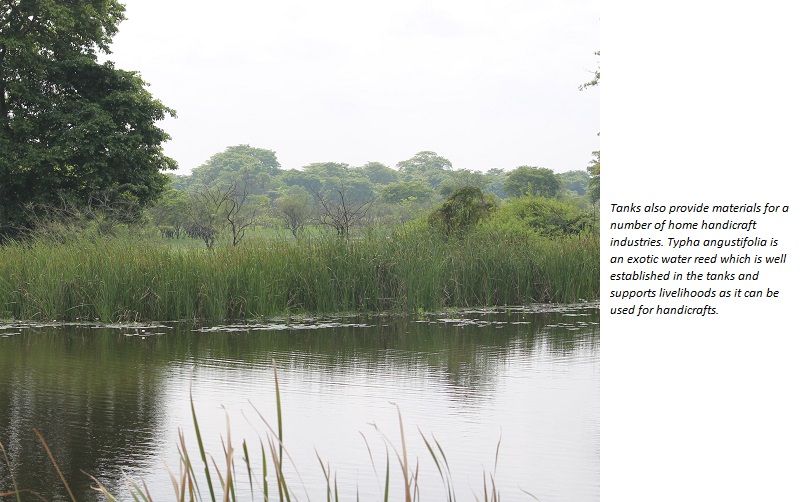
In four tanks — Aluthgama, Massalawa, Konakumbukwewa, Galkadawala — the vegetation of the yathuru wala was improved by augmenting it with Lasia spinosa (Sinhala: Kohila; Tamil: No name known) and Ipomoea aquatica (Sinhala: Kang kung; Tamil: Kang kung kirai), as well as reeds.
Gasgommana:
In eight tanks — Massalawa, Maha Kadiyawa, Konakumbukwewa, Peenagama, Mailagammana, Kuda Kadiyawa, Galkadawala, Kayangollawas — the gasgommana was replanted with the same species, as for the kattakaduwa area, except for Areca catechu.
Plant nurseries:
The land for two plant nurseries was donated by two villagers and maintained for the project duration by them. About 7,500 plants from these nurseries were used in the process of restoration.