Community Empowerment
Community mobilization
The regular procedure of small tank rehabilitation is through contracting the identified rehabilitation work on individual tank basis. The required rehabilitation work is identified by the Department of Agrarian Development. Larger repair work is contracted out directly by the authorized Government Department (in the case of small tanks, the DAD) through a tender process. Usually Farmer Organizations are not involved in this process. By procedure, the minor repair work is assigned to the relevant Farmer Organization, provided that the Farmer Organization is capable of carrying out the work. However, this process is now heavily influenced by politicians and other powerful groups, therefore, Farmer Organizations rarely involved even in the minor repair work of their tanks.
The tank rehabilitation work of the IUCN-HSBC-DAD project on Ecological Restoration of Kapiriggama Cascade Tank System was carried out through the empowered community to enhance their sense of ownership towards the work, which would sustain beyond the project duration. The project adopted an innovative mechanism to ensure the Farmer Organizations of the Kapiriggama cascade are directly engage in the rehabilitation work.
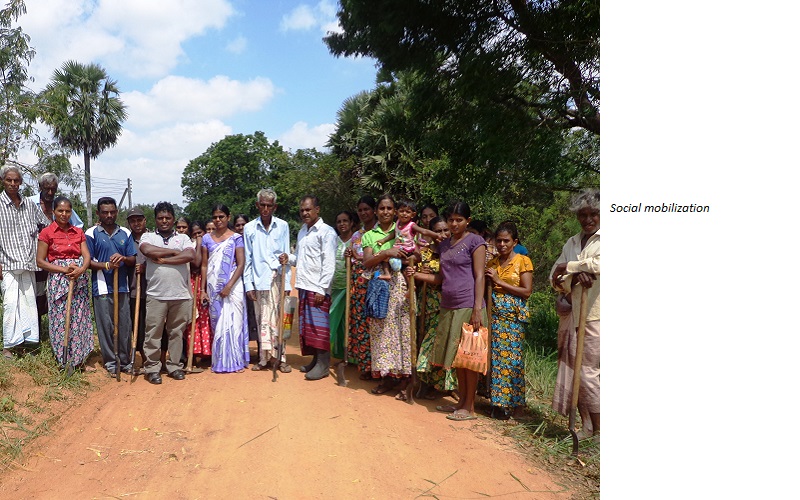
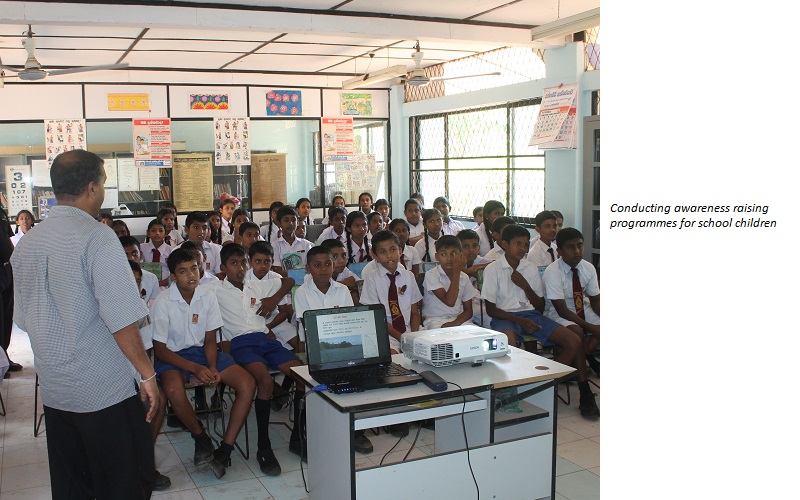
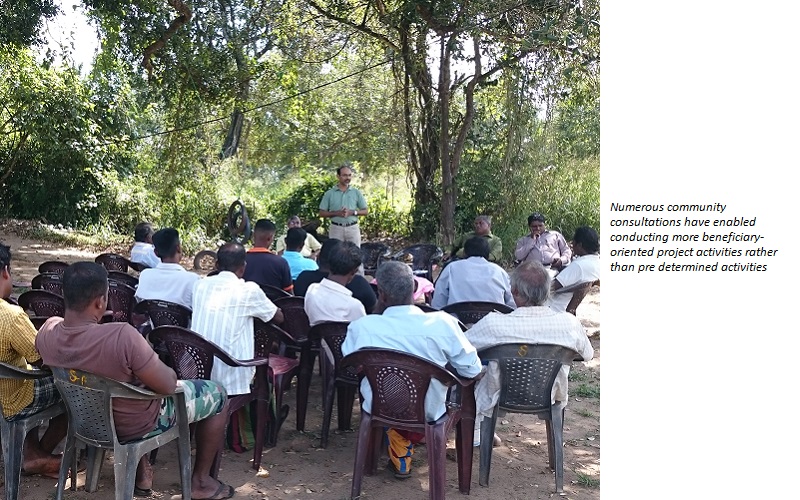
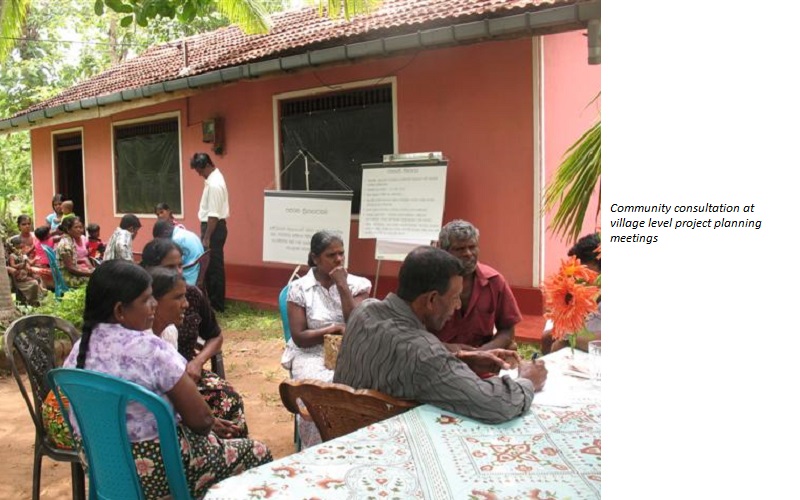
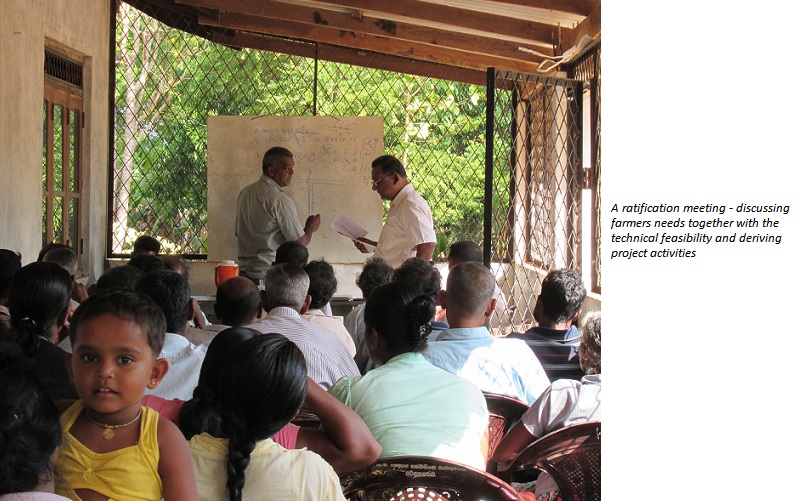
As the first step the Farmer Organizations (FOs) and the community were mobilized through a strong social mobilization process. A series of village level awareness raising programmes were conducted to educate the community on the project. The project approach was unique as it did not have a predetermined fixed set of activities, instead it has a more dynamic beneficiary-oriented approach to determine the specific activities. In this approach the local community was consulted and the technical feasibility of the identified activities was verified with the Department of Agrarian Development (DAD) which is the mandatory institute for small tank rehabilitation in Sri Lanka.
The funds for carrying out the infrastructure rehabilitation work and partial desiltation of tanks were then transferred to FOs through legal contracts. The technical assistance for the work was provided the FOs by a full time IUCN Technical Officer and DAD technical officers. All the tank related rehabilitation work were carried out by the FOs through this mechanism. This was proven to be an effective mechanism where the FOs are empowered to carry out the restoration work of their tank by themselves. It is also proven to be a cost effective method compared to the regular mechanism where work is sub contracted to outside contractors.
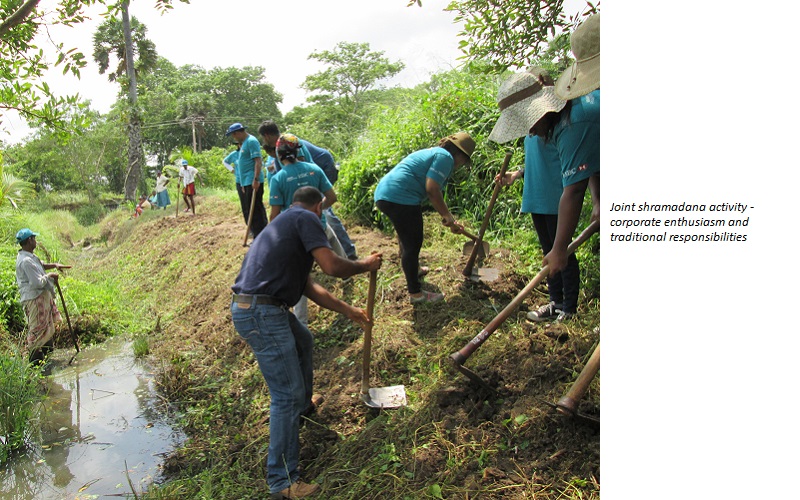
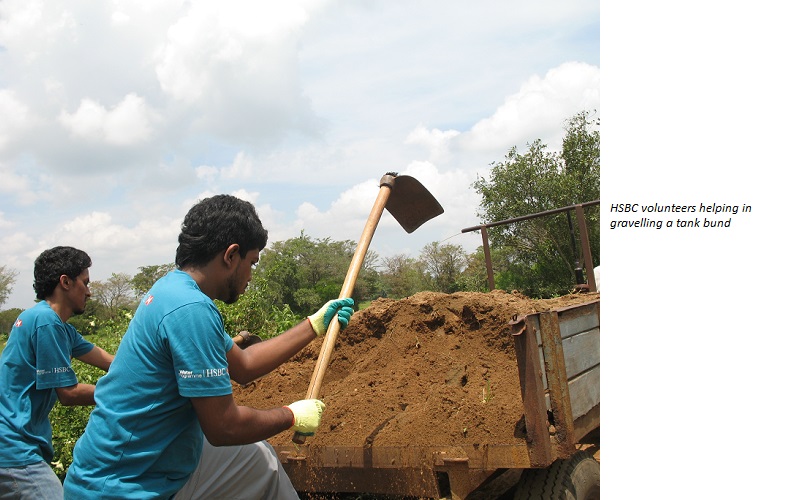
In addition the community was mobilized to take part in replanting activities in surrounding environment of 13 tanks. The community also engaged in small scale rehabilitation work such as gravelling roads, removing invasive plant species from tank environment through “shramadana” activities (providing free labour). About 175 HSBC staff clocked about 1,500 volunteer hours in these shramadana activities with the community. HSBC voluntary work not only gave the HSBC staff to experience a different lifestyle but also enhanced the sense of responsibility and the ownership of the community towards the work.
Strengthening the institutional framework
Strengthening institutional framework was identified as one of the key requirements for managing cascade system as the primary management unit of small tank irrigation systems. A cascade management committees was formed, which consists of the Farmer Organizations and local level administrative officials, for cascade level resources (water and land) management.
see instituteonal framework TN and fact sheet
Handing over
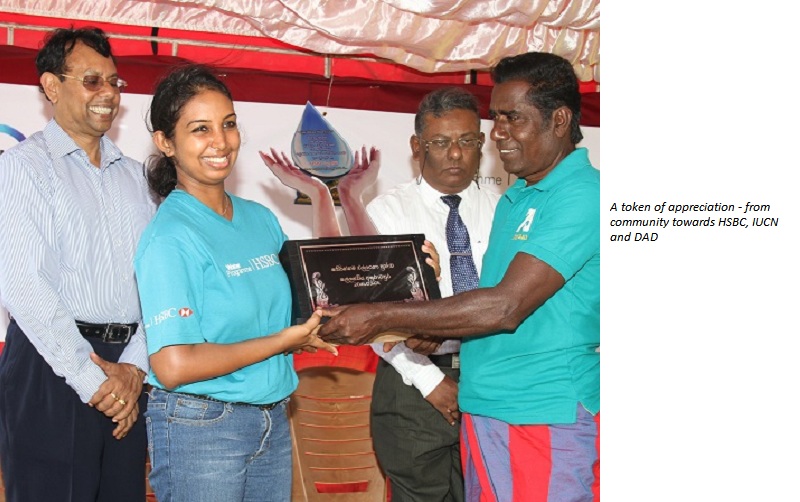
A handing over ceremony was conducted to mark the conclusion of the project while handing over the restored tanks back to the community for operation and maintenance. The quality of the work was publicly assured by the Department of Agrarian Development (DAD). Officials from HSBC, DAD, IUCN, Farmer Organizations, and the community members participated in the ceremony. The community expressed their deepest appreciation towards HSBC, IUCN and DAD and awards were presented to IUCN and HSBC as souvenirs of their appreciation. The event was covered by media.
Project achievements
- Eight Farmer Organizations and the community were mobilized to take a lead role in physical restoration of 18 tanks and ecosystem restoration in 13 tanks. Eighteen shramadana programmes were carried out, with the participation of about 700 villagers from ten villages.
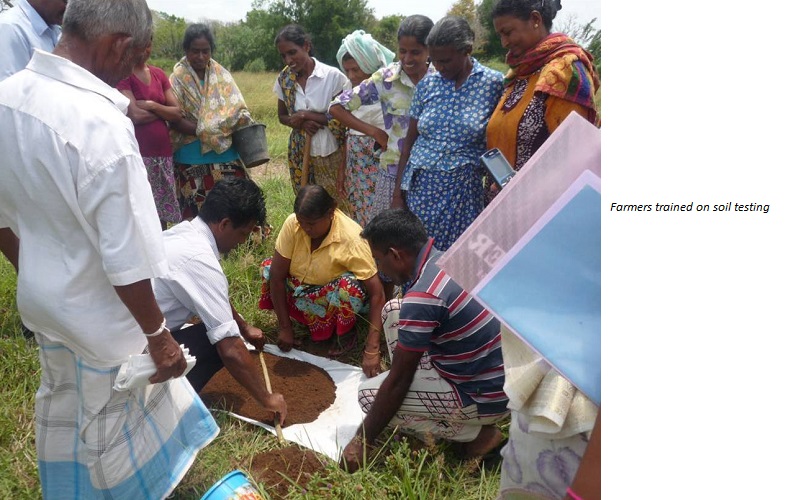
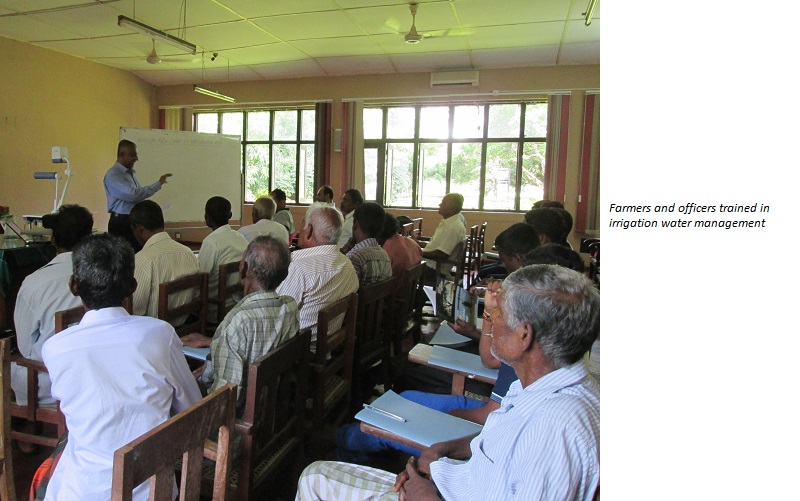
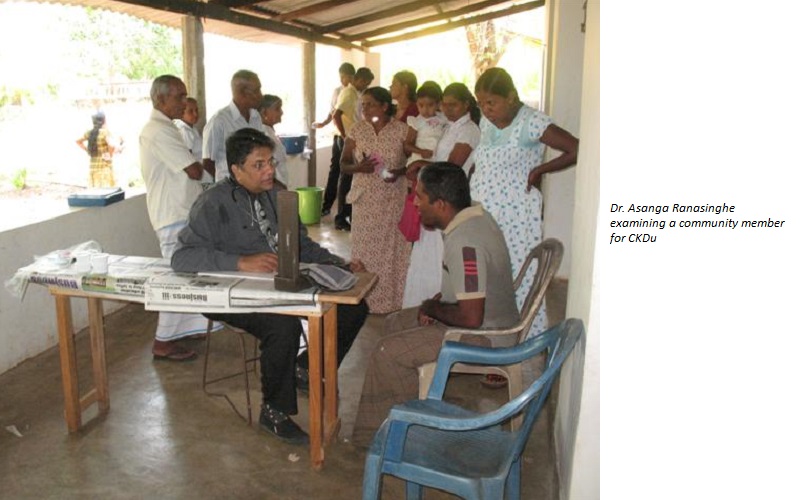
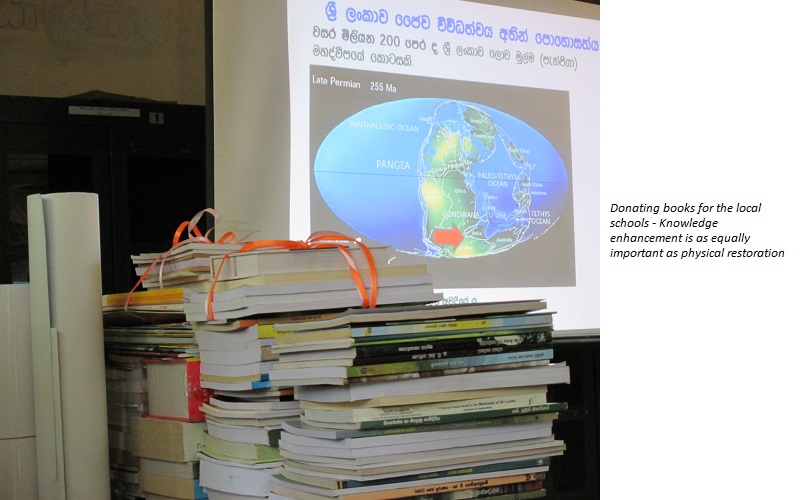
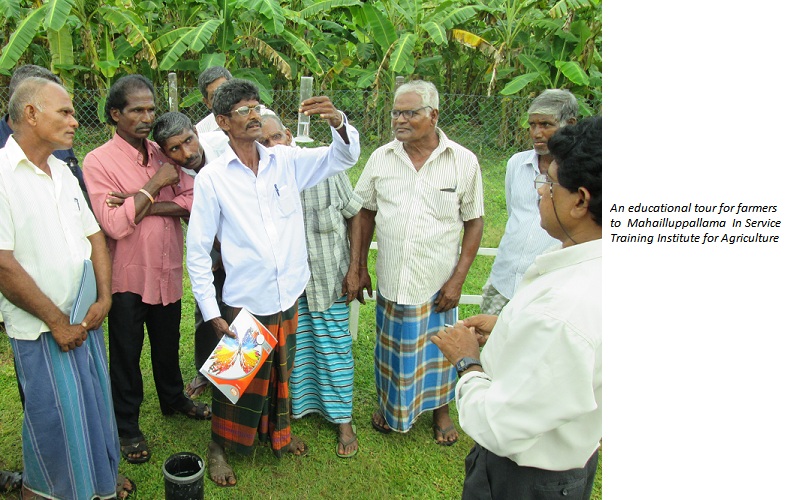
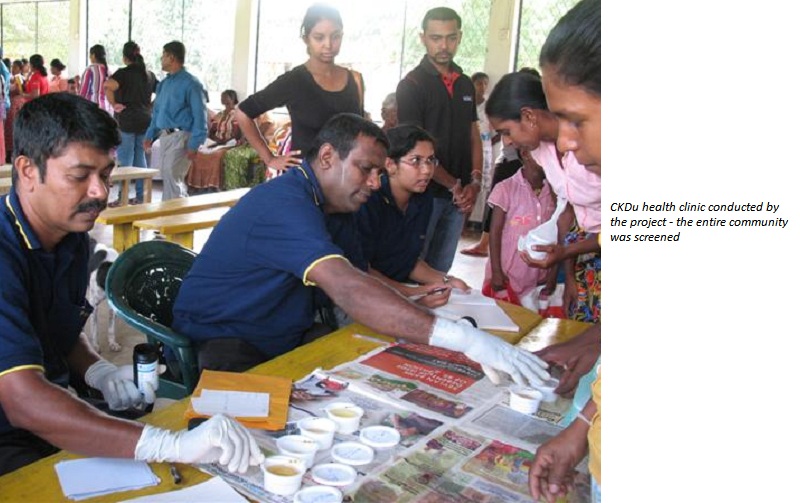
- Awareness raising programmes conducted on village level awareness raising on cascade systems (300), CKDu health awareness (300), sustainable farming and soil conservation (250), irrigation water management (190), traditional rice farming (104) for the farmers of the project area. Awareness raising programmes on cascade environment and its conservation were conducted for over 350 school children representing all the schools in the project area. Over 600 books and 3 steel cupboards were donated to schools in the project area to establish environment libraries.
- A Cascade Management Committee is formed for better management of the natural resources of Kapiriggama cascade.
- A policy brief has been developed with recommendations for restoring traditional small tank cascades in Sri Lanka which is submitted to the relevant Government agencies for proceeding further. The Department of Agrarian Development is already planning to take cascade approach as their policy for small tank restoration
- Opportunities up scaling the have been consider. A proposal have been submitted for an initiative of “strengthening the resilience of smallholder farmers in the dry zone of Sri Lanka to climate variability and extreme events through an integrated approach to water management” where the Kapiriggama project is to be used as a model for 30 other cascades.
- The project is proposed for the Asia Responsible Entrepreneurship Award 2016 (AREA 2016) and Asian CSR Award 2016 under the category of community empowerment. The project has been selected for the final round of AREA 2016.
Some of the “Stories of change” are linked below.
- The tale of neglect in the Kapiriggama Cascade System. . .
- Empowering women. . .
- Our grateful thanks… (the view of a community member expressed at the Kapiriggama Project Handing Over Ceremony)
- An exemplary investment for the Future… (the view of Department of Agrarian Development expressed at the Kapiriggama Project Handing Over Ceremony)